Threat intel4 min read
BADBOX 3.0 turned cheap TV boxes into the biggest ad-fraud operation disclosed so far
Infected low-cost Android streaming boxes generated about 40 billion fake ad bid requests a day and rented out home internet connections through 11 proxy networks. Here is how to check your devices.
4Tify Team
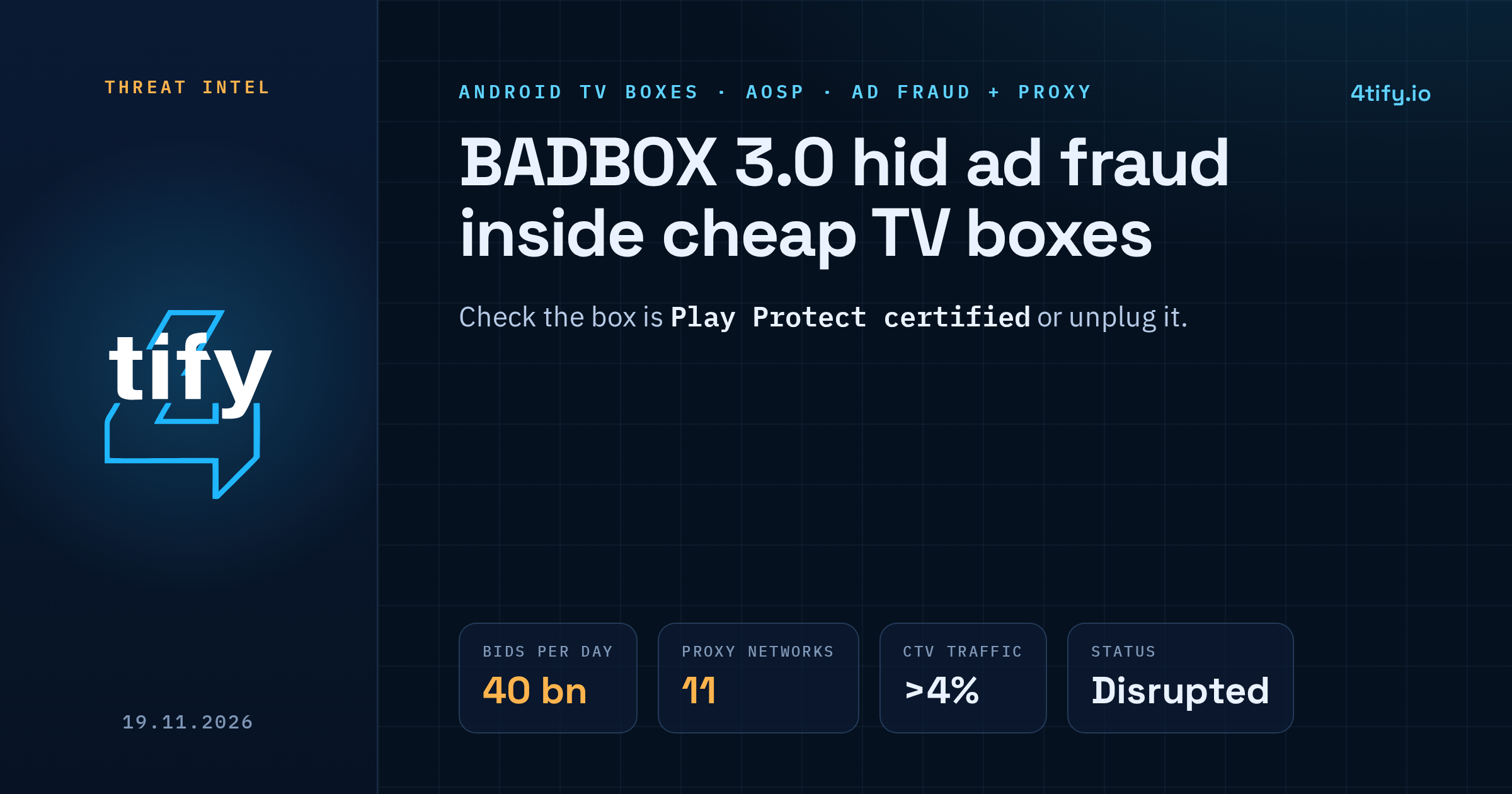
A fraud operation called BADBOX 3.0 was disclosed and disrupted on 18 November 2026. It ran on low-cost Android streaming boxes. At its peak it produced roughly 40 billion advertising bid requests a day, more than three times the previous record holder, an older scheme known as VASTFLUX. At that peak it made up more than 4% of the connected-TV traffic seen by the team that tracked it.
That number counts requests to bid on ad space. It doesn't count ads people watched, money paid out or infected devices. No count of BADBOX 3.0 infections has been published.
What happened
The boxes carried new backdoors that pulled down fraud modules from a central catalog. Those modules played video ads in windows the owner could never see, so the screen looked normal while the box was earning money for someone else. The ad requests pretended to come from well-known, legitimate connected-TV apps so that ad platforms would accept the traffic as real.
Fake ads were only half the scheme. The same infected boxes could be signed up, without the owner knowing, to any of 11 residential proxy networks. A residential proxy rents out a household's internet connection so strangers can route their traffic through it. To the websites on the other end, that traffic looks like it comes from an ordinary home. One of those networks, PXYEDGE, is assessed to be a renamed successor of IpMoYu, a proxy service tied to the earlier BADBOX 2.0 campaign.
Researchers linked the module catalog to TXCZ, a Chinese electronics manufacturer, through shared server infrastructure and code that checked for TXCZ-specific device settings.
Who is affected
The affected hardware is cheap, off-brand streaming boxes built in mainland China and sold around the world. They run the bare Android Open Source Project (AOSP). They are not Android TV OS devices and are not Play Protect certified, even though they are sold as "Android" boxes.
This is the third round of the same family. The original BADBOX was found in 2023 and disrupted in 2024. In June 2025 the FBI warned that BADBOX 2.0 involved millions of infected devices, and in July 2025 Google took legal action against BADBOX 2.0 operators over more than 10 million uncertified devices. That 10 million figure belongs to the earlier campaign, not to this one.
For a household, the cost is a hijacked internet connection that can be rented out for criminal traffic. For a company, an unmanaged TV box in a meeting room or reception area does the same thing to the corporate network, with its public IP address lent to strangers.
What to do now
- Check the box's certification. In the Play Store app, open your profile, then Settings, then About. Google explains the steps and what an uncertified device means in its Play Protect certification guide. If the box isn't listed as certified, treat it as untrusted.
- Pick certified hardware. Prefer devices that run Android TV OS and carry Play Protect certification. Be wary of no-name boxes sold as "unlocked" or promising free premium content.
- Look for the warning signs. The FBI's BADBOX 2.0 public service announcement lists them: apps that only come from unofficial stores, a setup that asks you to switch off Play Protect, and unexplained internet traffic. Its advice is to consider disconnecting suspicious devices.
- Unplug what you can't vouch for. A box that streams normally is not necessarily clean, because the hidden ads didn't change what the owner saw on screen.
- Companies: keep streaming boxes and other consumer gadgets off the corporate network, or isolate them on a guest segment, and watch for steady outbound traffic from devices that should be idle.
Finding devices like these is part of what our vulnerability scanning service does on internal networks. A scan lists every device that answers, including the forgotten box behind the meeting-room TV, so it can be checked or removed before someone else uses it.