Breach4 min read
TfL takes Oyster photocard site offline after 265,000 accounts are exposed
Transport for London shut its Oyster photocard website after suspicious activity on 16 November. Email addresses, phone numbers, home addresses, dates of birth and security answers of about 265,000 account holders may be compromised.
4Tify Team
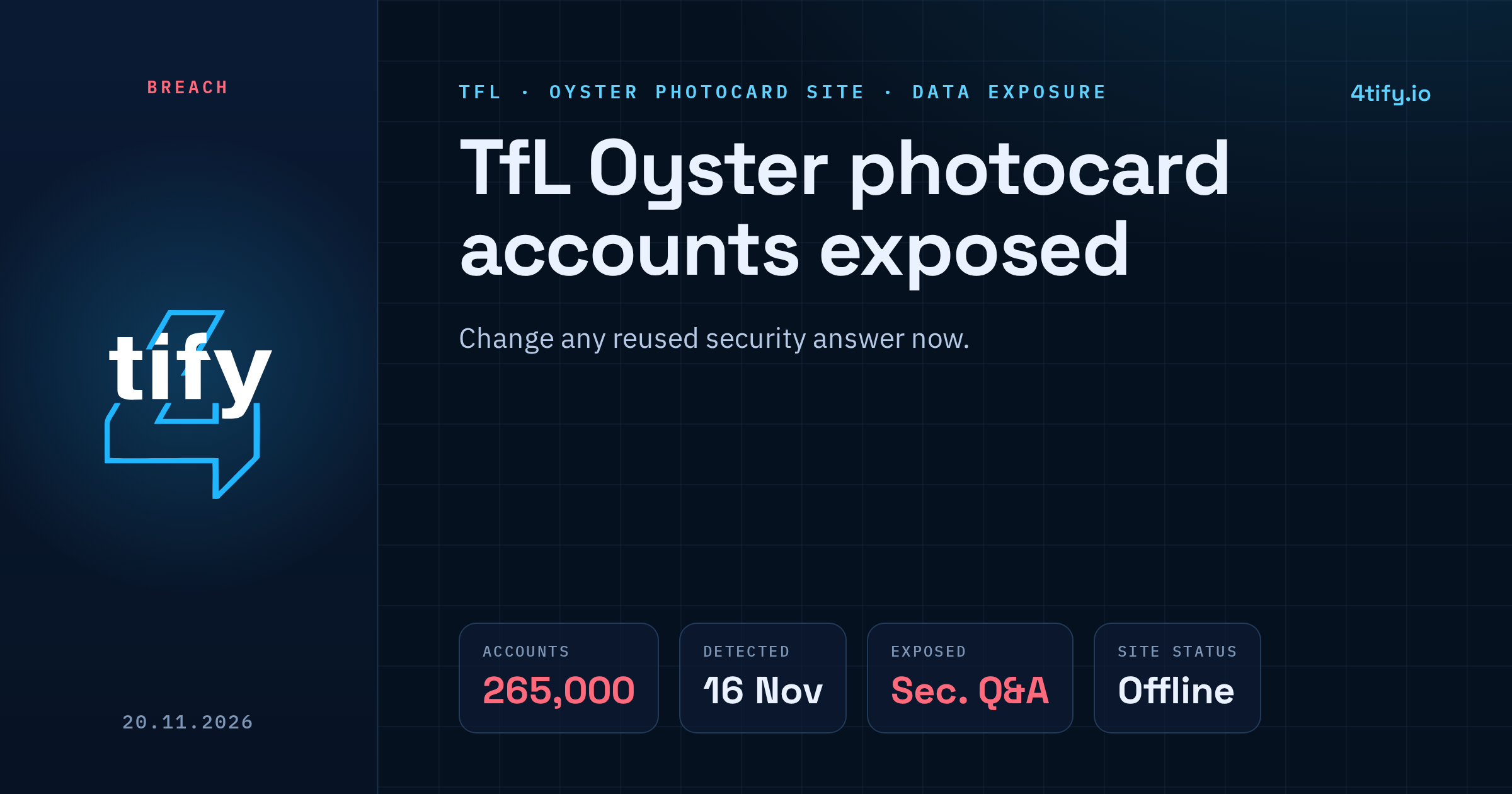
Transport for London (TfL) says about 265,000 Oyster photocard account holders may have had personal details compromised after suspicious activity on its photocard website on 16 November 2026. TfL took the photocard system offline to cut off access, and on 18 November it emailed the people it believes are affected.
What happened
TfL describes the event as unauthorised access to personal information held in photocard web accounts. Its public notice does not say who was behind it, how they got in, or whether a software flaw was involved. The investigation is still running, and TfL has notified the Information Commissioner's Office.
Only the Oyster photocard website is affected, TfL says. Its other websites and services are not part of the incident.
What data is involved
For the affected accounts, TfL lists:
- email address
- phone number
- home address
- date of birth
- the account's security question and answer
TfL's current assessment is that passwords, bank and payment card details, journey history, photographs and copies of supporting documents were not compromised. The names and dates of birth of children with a Zip Oyster card are also outside the exposed set.
Who is affected
The photocard site handles discounted travel: Zip Oyster cards for children and young people, plus the 18+ Student, 18-25 Care Leaver, 60+ London, Apprentice and Veterans Oyster photocards. If you hold one and received TfL's email on 18 November, treat your details as exposed. Check spam and junk folders before deciding you weren't contacted. On current information, people who did not get that email are not affected.
Cards keep working. Existing photocard holders can carry on travelling, and 60+ London holders with an annual address check due will not lose their card while the site is down. TfL will contact them to finish the check.
Why the security answers matter most
A leaked password takes a minute to change. A security answer such as a mother's maiden name, a first school or a childhood street is often reused everywhere, and you can't forget it on purpose. If the same question and answer protect an email account, a bank login or a mobile account, whoever holds this data has a head start on account-recovery fraud.
The rest of the set (address, date of birth, phone, email) is exactly what a convincing scam call or fake "TfL refund" email needs. Expect phishing that quotes your real details back to you.
TfL's photocard site was also offline for weeks after the wider TfL cyber incident in September 2024. Nothing published so far links the two events.
What to do now
- Look for TfL's 18 November email, including in spam and junk.
- If the same password or security question and answer are used anywhere else, change them there now. Use answers that are not real facts and keep them in a password manager.
- When the photocard website returns, TfL will email affected customers and ask them to change their password, security question and answer. Do it then, and reach the site by typing tfl.gov.uk yourself instead of following a link in a message.
- Treat calls, texts and emails about your photocard, refunds or compensation with suspicion. TfL says there is no need to contact it at this stage.
- If someone contacts you claiming to have your data, report it to Action Fraud on 0300 123 2040.
- For renewals or journey-history questions while the site is down, call TfL on 0343 222 1234 (charges may apply).
Updates will appear on TfL's incident notice for photocard holders, and the NCSC has practical guidance for individuals after a data breach.
For organisations
Security answers, dates of birth and home addresses tend to resurface on criminal forums and paste sites long after an incident. Our Deep/Dark Web monitoring service watches those channels for your company's domains and staff details, so exposed data is flagged early, before it turns up in a recovery-fraud or phishing attempt.